My work begins with an overused and inherently vague concept: 'inspiration.' Webster's would describe it as 'a sudden brilliant, creative, or timely idea.'.
Inspiration gives birth to motivation. The motivation or excitement to create, in the case of an artist. On any random day, something unique catches my eye. It is typically a sharp contrast of light and shadow. I ask myself, 'Why is this interesting?'. 'Why do I want to paint this and not that? '. Answering those questions before picking up a brush is critical to the success of the work. Decisions will be made based on those answers.
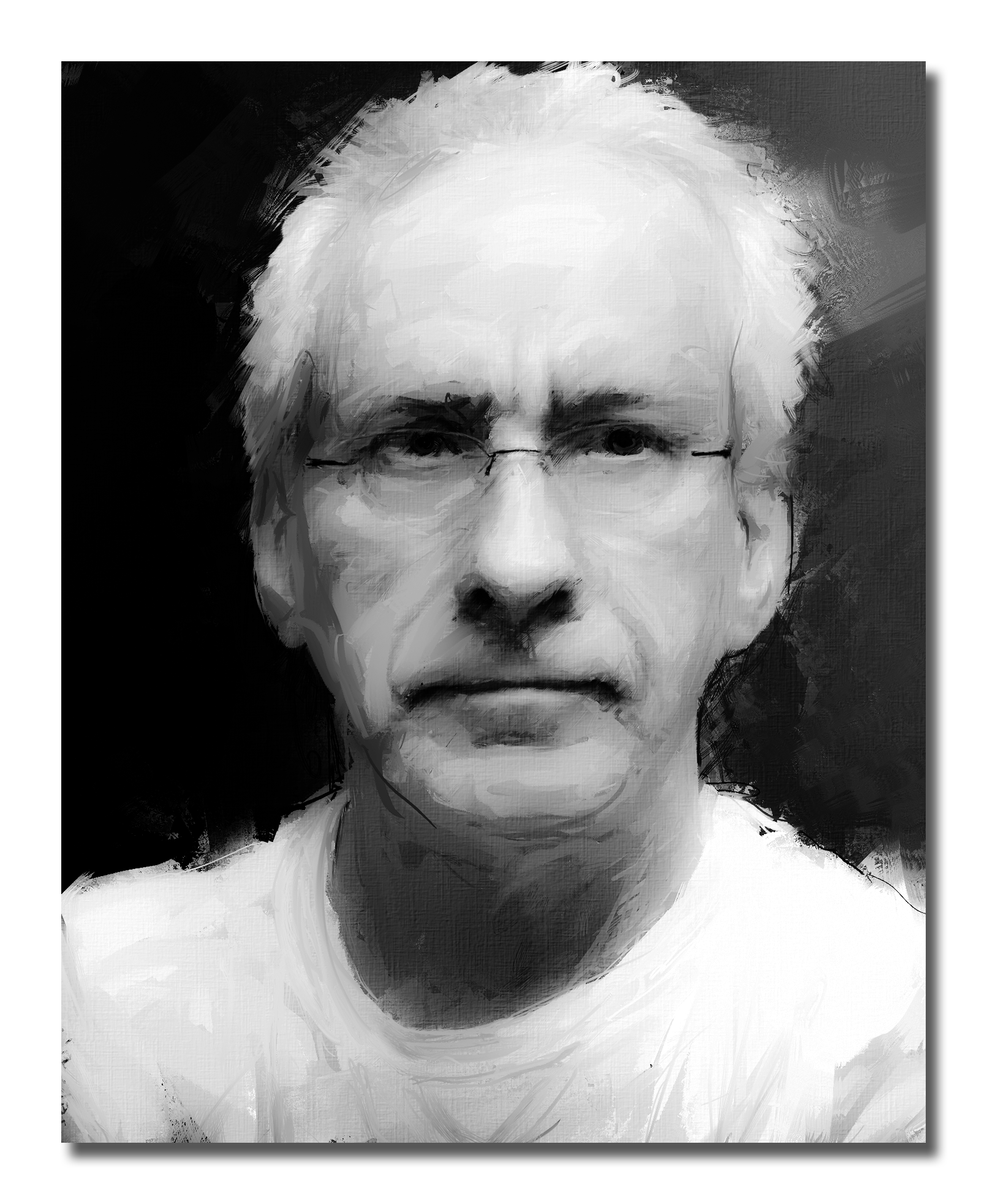
Before I ever touch the final surface, I sketch. I experiment with composition. I pick a focus area—most likely whatever it was that originally led me to 'inspiration'. I nail the light and shadow that first caught my attention in black and white. Color isn't even important at this point. Color may get your attention, but it is light and shadow that tells you what you are looking at, so must I establish that first. The lights and darks (or 'value') in a painting describe form. There is an old saying (among artists, at least): 'Value does all the work, and color gets all the credit.'. But, if you get the values correct, you can push color anywhere you want.
When I start the actual piece, and having my final sketch and value studies in place, I lay down a background/underpainting. I want the subject to emerge from that background rather than simply appearing on top of it. I use big brushes. Detail is the enemy in this stage.
I stand back. I may eat a ham sandwich. I recheck my references, my value studies, and begin again. I use a smaller brush this time, but not small. And lastly, I define the edges, the deeper contrast that draws your eye to the focus area that I chose before I started all this. An artist wants to control your eyes - the path they take and where they land.
I typically know a piece is finished the first time I think that it is not. The first time I think that it needs just a little more. Just a nudge here and there. Knowing when to stop can be challenging, and I do not always get it right. Knowing when I have gone too far is usually obvious. When nothing else is crying for attention, it is done. I sign it and prepare it for you, so that what you receive is not just an painting, but a carefully crafted object that lets you see what I saw and feel what I felt. Thank You.